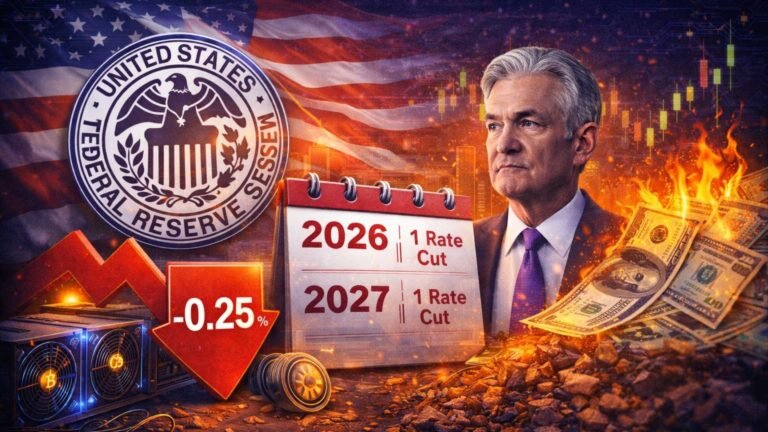
- The United States Federal Reserve has allowed a 0.25% rate cut in the December 9-10 meeting.

- The Effective Federal Funds Rate is now at 3.625% (window of 3.5% to 3.75%).
- Fed indicates there would be only 1 rate cut in 2026 and 1 in 2027.
- Markets are expected to react sharply negatively to this decision.
- Bitcoin could break $82k in Dec 2025.
Author: dhirendradas007@gmail.com
-
US Fed Cuts Interest Rates by 0.25%, Only 1 Rate Cut Per Year in 2026 & 2027, Market Correction Expected
-
World’s First Browser-Based Compute Platform Just Got Government Backing, Neurolov Closes $12M deal to Fuel AI Workload with Decentralized Compute Power
Imagine a world where your everyday laptop, smartphone, or even gaming rig could power the next big AI breakthrough, without you ever leaving your browser. No costly data centers, no complex setups, just pure, decentralized compute power at the click of a button. This isn’t a distant dream, it’s the reality Neurolov AI is building, and it just got a massive stamp of approval.
At the Vibrant Gujarat summit, India 2025, Neurolov, led by visionary CEO Dhruv Panchal, signed a historic $12 million government-backed Memorandum of Understanding (MoU) to revolutionize AI infrastructure with its browser-based, decentralized GPU network. Backed by Chief Minister Mr. Bhupendra Bhai Patel, this deal positions Neurolov as the global leader in the Decentralized Physical Infrastructure Network (DePIN) and AI compute revolution. Here’s the story of how Neurolov is rewriting the rules of AI, making it accessible, sustainable, and community-driven.
The AI Compute Crisis: A $2 Trillion Opportunity
Artificial Intelligence is no longer a niche, it’s the backbone of modern innovation. From chatbots assisting schoolchildren to AI-driven diagnostics in healthcare, the global AI market is expected to skyrocket from $136.6 billion in 2022 to $1.81 trillion by 2030, growing at a CAGR of 37.3%.
But there’s a catch: AI’s explosive growth is rapidly outpacing the world’s available compute infrastructure. Centralized data centers, the traditional engines powering AI, are buckling under the demand.These facilities are resource-intensive, consuming over 200 terawatt-hours of electricity globally in 2022, with projections indicating this could triple by 2026. They also consume millions of liters of water daily for cooling systems, just one ChatGPT query can indirectly use up to 0.5 liters. Add the environmental impact of land rezoning, rising e-waste from GPU manufacturing, and carbon emissions, and it becomes clear: centralized compute is environmentally and economically unsustainable.
For startups, researchers, and even governments, the costs of accessing compute are prohibitive. Cloud providers like AWS and Google Cloud charge premium rates for GPU resources, creating a compute bottleneck that chokes innovation and limits access to only the wealthiest players.
Enter Neurolov AI, a Web3-native platform with a bold mission: to decentralize the future of compute by turning everyday devices into micro data centers. Neurolov envisions a future where anyone can contribute idle GPU power through their browser, helping to close the compute gap, reduce environmental impact, and unlock a $2 trillion opportunity in the decentralized AI economy.
Neurolov’s Game-Changing Innovation: Compute From Your Browser
Neurolov’s flagship product, NeuroSwarm, is the world’s first browser-based decentralized GPU marketplace, built on Solana and powered by WebGPU technology. Unlike traditional cloud providers, Neurolov doesn’t rely on sprawling data centers. Instead, it taps into the idle GPUs of everyday devices, laptops, desktops, smartphones, and servers, worldwide. With just a browser, anyone can contribute compute power to the network and earn $NLOV tokens, while AI developers and businesses can rent high-performance GPUs at up to 70% lower costs than AWS or Google Cloud.
The brilliance lies in its simplicity. There’s no need for apps, extensions, or technical know-how. Open your browser, connect to NeuroSwarm, and you’re part of a global AI compute grid. This plug-and-play model is already powering real-world applications, from Orbiter Neural’s robotics simulations to Helixo AI’s biotech diagnostics and Model Labs’ agentic LLM infrastructure. With 15,000 active nodes generating 10 million TFLOPS and 99.99% uptime across 26 countries, Neurolov is proving that decentralized compute isn’t just viable, it’s the future.
The $12M MoU: A Government-Backed Leap Forward
At the Vibrant Gujarat summit, India 2025, Neurolov made history by securing a $12 million MoU with the government, endorsed by Chief Minister Mr. Bhupendra Bhai Patel. This landmark deal, one of the largest in DePIN history, empowers Neurolov to deliver decentralized GPU power for government initiatives, from smart cities to healthcare and defense AI.
Chief Minister Patel, known for driving large-scale innovation, sees Neurolov’s browser-based model as a game-changer. “This partnership aligns with our vision for a tech-driven future,” he said, emphasizing its potential to scale AI infrastructure without the environmental and financial burdens of centralized data centers. The deal also signals a global shift: for the first time, a major public institution is backing a decentralized compute platform, validating DePIN’s real-world impact.
Neurolov’s plan? To onboard 100,000 compute contributors globally, creating a borderless GPU grid capable of supporting 5,000 AI startups and researchers. With backing from Victus Capital and now government support, Neurolov is on track to capture $300 million of the $2 trillion AI compute market by 2027.
The $NLOV Token: Fueling a Decentralized Economy
At the heart of Neurolov’s ecosystem is the $NLOV token, a utility token with a fixed supply of 500 million. It’s the lifeblood of the NeuroSwarm marketplace, driving a closed-loop economy where:
- Developers pay for compute services in $NLOV, accessing GPUs 40 to 70% cheaper and 30% faster than cloud providers.
- Contributors earn $NLOV by sharing idle GPU power, creating a permissionless income stream.
- Institutions stake $NLOV for priority compute access, ensuring scalability for enterprise workloads.
- Investors benefit from rising token demand as AI workloads grow.
As AI demand skyrockets, so does the need for compute, driving $NLOV’s value. Unlike many crypto projects with speculative tokens, $NLOV is tied to real-world utility, powering AI training, 3D rendering, and scientific research. With cross-chain liquidity and governance rights, it’s a cornerstone of Neurolov’s decentralized vision.
Who Benefits? Neurolov’s Diverse Audience
Neurolov’s ecosystem is designed for a wide range of users, as outlined in their Ideal Customer Profiles (ICPs). Here’s how it serves key groups:
- Independent AI Developers: Solo builders and indie hackers get affordable GPUs via browser, bypassing costly cloud setups. They can experiment and deploy models instantly using Neurolov’s AI model hub and agent builder.
- AI Startups: Early-stage companies scale infrastructure without burning cash, leveraging pay-as-you-go GPUs and $NLOV incentives.
- Web3 Developers: Solana and Ethereum devs integrate AI into dApps, using Neurolov’s blockchain-native compute and $NLOV payments.
- DePIN Contributors: Gamers, crypto miners, and students monetize idle GPUs with easy onboarding and fair rewards.
- AI Researchers: PhD students and open-source contributors publish models on Neurolov’s decentralized hub, earning $NLOV from usage fees.
- Retail Enthusiasts: Non-tech creators generate AI images, videos, or music via a no-code interface, enjoying gamified community features.
- Governments and Enterprises: Institutions like the Indian government access scalable, eco-friendly compute, reducing reliance on centralized clouds.
From hackathon participants to DAOs, educational institutions to DeFi builders, Neurolov’s platform is a one-stop shop for AI and Web3 innovation.
Sustainability at the Core
Traditional data centers are environmental disasters, consuming vast resources and driving up utility costs for communities. Neurolov’s decentralized model flips the script. By leveraging existing devices, it minimizes the need for new hardware, slashing e-waste and the environmental impact of GPU production. Unlike centralized facilities, which use millions of gallons of water daily, Neurolov’s network relies on devices already in use, drastically reducing water and energy demands.
This sustainability focus resonates with governments and institutions worldwide, making Neurolov a natural partner for eco-conscious initiatives. As Chief Minister Patel noted, “Neurolov’s model is not just innovative, it’s a sustainable path to AI leadership.”
What’s Next for Neurolov?
With the $12M MoU in hand, Neurolov is accelerating its global ambitions:
- Global Expansion: Scaling to 100+ countries and onboarding 500,000 nodes by 2026.
- Token Presale: Launching the $NLOV presale to fuel ecosystem growth.
- New Tools: Releasing features for agentic compute, and decentralized LLM training.
- Partnerships: Collaborating with education, biotech, and defense sectors to power AI innovation.
Neurolov is also empowering Micro, Small, and Medium Enterprises (MSMEs) with affordable compute, fostering a grassroots tech economy. By 2026, the company aims to connect 1 million devices, creating a decentralized grid capable of rivaling Big Tech’s infrastructure.
Why Neurolov Matters Now
In a world where AI innovation is throttled by centralized bottlenecks, Neurolov is a breath of fresh air. Its browser-based, Web3-native platform makes compute power accessible to all, not just tech giants. It’s sustainable, sidestepping the environmental pitfalls of traditional data centers. And with government backing, it’s proving that DePIN can deliver real-world impact at scale.
As Dhruv Panchal puts it, “We’re not just building infrastructure, we’re building the future of AI, borderless, scalable, and tokenized.”
Join the Decentralized AI Revolution
Whether you’re a developer training models, a gamer with an idle GPU, or an investor eyeing the $2 trillion AI market, Neurolov has a place for you. Visit neurolov.ai to:
- Connect your device to NeuroSwarm and earn $NLOV.
- Rent affordable GPU compute for AI projects.
- Participate in the $NLOV token presale.
- Follow Neurolov on X (@neurolov) for updates.
Neurolov isn’t just a startup, it’s a movement to decentralize AI, empower communities, and build a sustainable future. With a $12 million government deal and a visionary leader in Dhruv Panchal, the world’s first browser-based compute platform is ready to change the game. Are you in?
Explore Neurolov
- Website: neurolov.ai
- Swarm Dashboard: swarm.neurolov.ai
- Follow on X: x.com/neurolov
- Contact: support@neurolov.ai
-
The US Federal Reserve Leaves Rates Unchanged at 4.37% in July 29-30 Meet
- The US Federal Reserve has kept its interest rates unchanged for the current policy meeting.
- Existing policy rates for repo and reverse repo are 4.25% to 4.50%.
- Effective Federal Funds Rate at 4.37%.
- High inflation at 2.7% in June is the main reason for keeping the rates unchanged.
- All cryptocurrencies except Bitcoin and Ethereum have been facing a severe liquidity crisis.
Policy Rates Unchanged at 4.37%
The US Federal Reserve has kept interest rates unchanged for the fifth time this year after Fed meetings in March, April, June, and July 2025. The effective federal funds rate remains unchanged at 4.37% while the repo rate and reverse repo rate are in a window of 4.25% to 4.50%.
The last Federal Reserve interest rate reduction of 0.25% happened in December 2024.
The next Federal Reserve Meeting is on September 16-17, 2025, and will be the third-last meeting of the year. After September, there are two meetings scheduled on October 28-29 and December 9-10 this year.
Why are Bitcoin and Ethereum Growing?
Bitcoin and Ethereum have been growing due to increased demand from corporate sectors. Bitcoin has seen its demand surge in the ETF markets and from companies like Strategy, Metaplanet, and GameStop, while for Ethereum, the demand has been surging from technology companies like Golem, Bitmine, and others.
Expectations from the Next Policy Meeting on September 16-17, 2025
The US Federal Reserve in its January 2025 meeting indicated that there is a likelihood of only 2 rate cuts and a maximum of 0.5% in 2025 due to inflation expectations of 3% throughout the year. Till date, i.e., August 2025, the inflation figures have remained higher than 2.4% with the latest report of June showing a CPI (inflation) of 2.7%.
All of these make it difficult for the US Fed to cut interest rates. The Fed has a mandate to keep inflation below 2% while ensuring there is proper growth in the job market. As the job market appears relatively stable, there is very little pressure on the US Federal Reserve.
However, since the policy meeting of September will be one of the last 3 meetings in 2025, there is a chance of at least a 0.25% rate cut, given that Jerome Powell continues as the chairman. If Powell resigns, Donald Trump might be looking at a 3% rate cut within the first half of 2026.
-
These Cryptos Could Outperform in the Next Alt Season
- Bitcoin’s growth has sucked all the liquidity from the markets which also has corporate money unlike altcoins.
- Stablecoin markets, too, have swelled up riding on cross-border payments.
- The Alt Season has already ended its current cycle, and markets are consolidating for the next.
- The upcoming alt cycle focuses on revenue, active users, and addressable market size.
- Cryptos like Ethereum, XRP, Solana, Chainlink, and Ton could outperform others in the future.
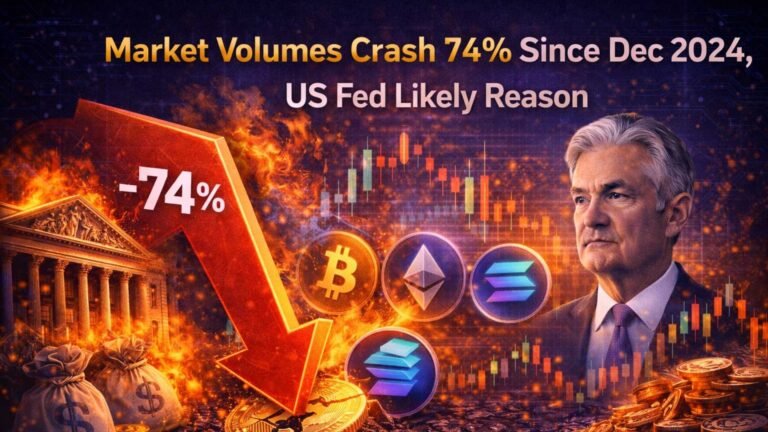
Table of Contents
Why did Bitcoin grow but Ethereum didn’t?
So far, Bitcoin is the only cryptocurrency with significant financial investment, thanks to the success of ETFs, corporate investors, and whales holding their investments without booking substantial profits.
Ethereum could not achieve a similar success because Ethereum ETFs currently do not allow staking, which reduces annual profits by as much as 4%. As a result, Ethereum ETFs failed to gain traction in the last 1 year of their existence (since July 2024).
Bitcoin had no staking component attached to its ETFs (it is a PoW Blockchain) and hence, people investing in Bitcoin are getting similar gains as those who are directly holding Bitcoin. In addition, ETF holders do not have to worry about securing their Bitcoin, which adds a whole other dimension of benefits.
Uncertainty in Stablecoin Markets
Stablecoins are the liquidity on which crypto markets run. Without them, there would be no way for investors to reap profits and retain them.
Furthermore, allocating 15 to 20% of your portfolio to stablecoins acts as a shock absorber. Without them, your profits in one cryptocurrency could be erased soon due to market volatility.
Currently, stablecoin markets have been witnessing massive policy changes. The US’s Genius Act, the European Union’s MiCA framework, and other ongoing legislations are attempting to regulate them in a manner that better addresses these issues.
We need more uniform stablecoin policy across the world to see a new era of growth in the crypto markets.
Will an Alt Season Ever Arrive?
The altcoin corresponding to the 2024 market rally has already arrived and faded away. This rally did not seem significant because, unlike previous alt seasons, Altcoin prices grew in tandem with the season; this alt season, the market size increased. This increase was evident in the changes to the Altcoin market cap between January 2024 and June 2025.
The largest gainers of this alt season were AI coins and memecoins. However, these gains failed to solidify because there was no utility driving them. In the case of AI coins, the rally was fueled by the hope of a future AI revolution. For the memecoins, however, they were simply based on unrealistic hype, followed by market saturation caused by the Solana memecoins.
When Will the Next Altcoin Season Arrive?
The next Altcoin season appears to be driven by utility, with a focus on tangible factors such as protocol revenue, real-world utility, addressable market size, and other critical aspects.
A few coins that could outperform others are Ethereum, XRP, Solana, Chainlink, and Toncoin.
Ethereum
Ethereum remains the second-largest crypto for a reason despite all its challenges. It powers the DeFi markets across multiple chains via its EVM and supports hundreds of protocols and dApps that utilize its Layer-1 chain for security.
Suggested Reading: Data Proves Ethereum Is The Real Market Leader
Ethereum’s current series of upgrades (Pectra, Dencun, Sharding) aims to make the Blockchain more decentralized through improved staking guidelines, reduced validator maintenance costs, lower downtime penalties, increased scalability, and enhanced security.
In its most developed form, Ethereum would be highly cost-effective, allowing validators to run nodes with just 1 ETH and scale up to 100,000 transactions per second.
XRP
XRP has been making great strides in the Payment and Tokenization markets. Its Blockchain is optimized to finalize transactions within a few seconds. Furthermore, transactions on XRP cost a fraction of what they cost on Bitcoin and offer significantly greater security.
XRP has been utilized for cross-border transactions, banking, and other finance-related applications.
Solana
Solana remains a top choice for dApps because of its reliable and low-cost Blockchain. The chain is also ready for RWA applications, which are believed to be one of the largest upcoming fields in crypto.
Chainlink
Chainlink has become a top utility coin due to its success in the Oracle market, cross-chain solutions (CCIP), and its enterprise adoption.
In terms of revenue, the project is doing extremely well. The annual estimated revenue for 2025 stands at $30 million for Chainlink.
Toncoin
TON benefits from its integration into the vast Telegram ecosystem, enabling dApps and DeFi protocols to operate at the lowest cost.
The Blockchain has a theoretical speed of 100,000 transactions per second. For Blockchain projects, Toncoin remains a cheap and scalable solution. It also provides its users access to over a billion Telegram users, as users do not need to install additional dApps for TON if they have Telegram.
-
Is PYUSD’s Launch on Stellar a Game-Changer for PayPal?
- PayPal introduces PYUSD on Stellar Blockchain.
- Could be mutually beneficial as PayPal gains tech in exchange for offering users to Stellar.
- PayPal could then develop its own DeFi marketplace on Stellar.
With PYUSD’s introduction to the Stellar blockchain PayPal aims to take benefits of the blockchain’s fast and low cost transactions which was not possible in Ethereum (where PYUSD was first launched). Ethereum is lot more expensive and too much slower than Stellar.
Table of Contents
PYUSD’s Unique Roadblock
Just after its launch PayPal PYUSD stablecoin met a significant roadblock due to its centralization. This was complicated further by Ethereum’s lack of adoption its high transaction fees and slower transaction times. Ethereum was falling way behind Solana, Stellar and other major blockchains even though it had the Dencun Upgrade on 13 March 2024.
PYUSD needed a blockchain which could not ensure faster transactions but could also cost a lot less in terms of blockchain fees. Stellar was probably chosen as a stopgap measure, or until Ethereum completely implemented its Sharding Protocol and scale its blockchain to the targeted 100,000 transactions per second.
Why Stellar?
Stellar as a blockchain was chosen because it closely resembled XRPL’s architecture. Both Stellar and XRPL are both money-transfer oriented blockchains and are meant to transfer funds from one part of the world to another quickly and cheaply.
What’s in Store for DeFi?
PayPal integrating Stellar with its platform means that it will grant more strength to the people ecosystem rather than being the other way round. If PayPal had joined the XRPL ledger instead of Stellar it would be one among many stablecoins on that chain. However, on Stellar, it could emerge as the dominant partner with its 400 million users.
The current setup it could make Stellar a monopsony of PayPal, which then could emerge as one of the largest DeFi services provider among TradFi companies.
PayPal could then introduce services like staking, lending, borrowing, liquidity pools, restaking and lot other tasks on it’s own platform. The end benefit would be reaped by PayPal and its 400 million users. However, Stellar would also gain access to PayPal’s huge userbase in the process.
-
Bitcoin Might Reach $150k by Q3 Due to Supply Shock
- The US Fed is expected to introduce a rate cut either at the May 6-7 FOMC meeting or the June 17-18 meeting.
- Institutions have already been buying with bigger plans in Q2 and Q3.
- Renewed retail buying of ETFs and spot Bitcoin is expected to take Bitcoin to $150k by September 2025.
Bitcoin Crosses $90k Decisively
In what appears to be a short squeeze, Bitcoin has crossed $85k and $90k within the last 48 hours. This move was expected in late April due to the overwhelming buying of Bitcoins by corporate investors.

Bitcoin Option Strike Prices with Open Interest Unable to find a way out, most short sellers have either liquidated their positions or have shifted higher towards $100k. The highest number of call options (used to short Bitcoin) now lie at $98k, which is expected to fall soon.
According to put options data, Bitcoin now has a very strong support at $80k and is unlikely to move below these levels even if the US Fed does not make an interest rate cut.
Recovery Should Last This Time
The markets have emerged from severe short selling in the last couple of days, and a faint recovery has taken place in top cryptocurrencies.

Bitcoin Recovers from $84k to $90k in 2 Days These recoveries are expected to last because of strong whale buying in multiple cryptocurrencies, primarily in Bitcoin. Both crypto native and corporate whales have bought at least $3 billion in the last few weeks.
Further, the risk of China selling Bitcoins has been taken as positive news. Historically, whenever China has tightened Bitcoin regulations, the markets have rallied, be it in 2017 (Bitcoin Mining Ban), 2021 (Bitcoin ban), and 2025 (selling of seized Bitcoin).
Upcoming Events That Impact Bitcoin’s Price
The upcoming two Federal Reserve FOMC meetings are expected to aid in the full recovery of crypto markets. The first meeting is to be held on May 6 and 7, while the second meeting is scheduled for June 18 and 19.
May 6 to 7 FOMC Meeting
In the next FOMC meeting, i.e., May 6 and 7, the US Federal Reserve is now expected to keep the rates stable despite a demand for a cut from the US Government.
President Donald Trump and several members of the U.S. Government have raised the demand for Jerome Powell’s removal citing the inability of the US Fed to cut rates amid a similar rate cut in Europe.
The rate cut in the USA has become urgent because of two reasons, the first being the need to restart US industries for which there is a need of cheap loans, and secondly, the US Government needs to refinance its $7 trillion debt in 2025 which it is unlikely to do at prevailing interest rates of 5.25%.
June 18 to 19 FOMC Meeting
If the May FOMC meeting does not cut interest rates, the next one in June is expected to cut them. The US Fed, too, has acknowledged the need for a dovish monetary policy.
However, if the May 6 to 7 FOMC meeting makes the cut, there is less chance of another rate cut in June to prevent inflation from rising high again.
Expecting a Supply Shock
Most of the sellers who had purchased Bitcoin between $80k and $100k in the previous rally are thought to have exited. This exit was visible in the retail market data, where retail ownership in Glassnode’s chart was at its lowest since November 2024.
Opposite to this, the corporate accumulation has been rising, and as per a Glassnode’s index, corporate accumulation has increased from 0.2 to 0.6.
Further, there is more interest pouring in from other corporations like Strategy and GameStop, both of whom are yet to make their purchases worth more than $10 billion (combined).
Since, at present not much of the markets are in selling mode, Bitcoin could see a supply shock as soon as the Fed cuts the interest rates.
-
Market Volumes Crash 74% Since Dec 2024, US Fed Likely Reason
- Top crypto analyst Markus Thielen brought the attention of the crypto markets to low market activity.
- The largest traded pair on 18 April was USDC-USDT, both stablecoins.
- Lack of clarity on US Fed interest rates seems to be the key reason for this stagnancy.
- The markets might experience high volatility around May 6-7 due to the FOMC meeting.
Table of Contents
Top Market Analyst Brings Attention to Low Activity
Top crypto analyst and a known figure in crypto markets, Markus Thielen of 10x Research, had shown that the most traded pair on April 18 was the USDC-USDT, both stablecoins.

Markus Thielen’s Data on USDT-USDC Being The Most Traded Pair #NOTE: The most traded pair yesterday, USDT and USDC, is traded by those who might need to convert their holdings from one chain to another.
This was further validated by CoinMarketCap data, where USDT was the most traded crypto.
18th was the Least Active Day in April for the Markets
The month of April has seen one of the lowest crypto market trading volumes in recent times. Market volumes plummeted from $3 trillion in December 2024 to $1.45 trillion in March 2025. Within the first three weeks of April, these volumes have gone even lower, with $800 billion by April 19th. If this trend continues, CEX volumes for April would see a 20% drop from March levels, plummeting to an estimated $1.2 trillion.

Monthly Crypto Exchange Volume April 2024 to April 2025 Within April, the lowest market volume was seen on April 18, which saw a 40% fall from the previous day. The Block’s chart for the 7-day EMA CEX volume as of April 18 was $34.1 billion, falling from $56.3 billion last Saturday, i.e., April 12, 2025.

7-Day Average CEX Volumes from April 2024 to April 2025 Expecting Volatility by May 7
The markets might be positioning for an uncertain FOMC meeting outcome on May 7, against previous expectations for a rate cut of 0.25%.
This change of expectations came after the Fed Chairman Jerome Powell addressed the Economic Club of Chicago, saying that the markets were indeed doing their best and there was no need for a Fed intervention if they plummeted.
However, economic data indicates that there might be room for at least a 0.25% rate cut as US inflation has plummeted to 2.4% in March, very close to its target of 2% and a considerable fall from 3% in February.
These mixed indications have confused the markets, most of which expect an uncertain situation at the next FOMC meeting on May 6 to 7. This confusion is also seen in Polymarket data, where users think there is a high possibility of no change in Fed interest rates.

Polymarket Predictions on Fed Interest Rates on May 7 FOMC Meeting Blockchain Lab’s Opinion
In our collective experience of over 10 years in the market, we expect huge volatility on May 6 and 7.
- A no-change in rates might crash the markets temporarily.
- A 0.25% rate cut could induce a rally in Bitcoin and broader markets. Bitcoin is already above $85k at press time.
This volatility could send the markets in a directionless manner for a few reasons.
- Crypto markets have reached an oversold zone.
- Donald Trump’s push for pro-crypto policies. An insider from the US government indicated that a Crypto Policy could be ready by June.
Hence, the best action in the current markets would be to either accumulate undervalued cryptos slowly or sit idly.
-
A Tariff War Supports Bitcoin’s Adoption at Dollar’s Expense
- A prolonged tariff war is likely to isolate global trade, prompting countries to diversify their foreign exchange reserves.
- Gold is unlikely to keep up with the demand, and Bitcoin has clearly emerged as a substitute.
- Multiple countries are likely to set up their own Bitcoin Reserves by 2030, as per Richard Teng, CEO of Binance.
The Current US-Led Trade War Summarized
Donald Trump has been trying to do turn correct a historical wrong as he tries to implement reciprocal tariffs for each individual country that has taxed the US government at a higher rates as compared to their own material being taxed in the US.
A few days ago Trump had shared reciprocal tariffs from multiple countries shocking top trading partners like India the European Union the United Kingdom Japan and China. However, soon he lowered the tariffs for all except China, so that each individual nation could negotiate their own trade deal with the United States on better terms.
However, these tariffs seem to have spooked multiple central banks which have been holding hundreds of billions of US dollars in their forex reserves. One of these banks is the People’s Republic Bank of China. This bank holds almost a trillion of dollars and has the highest dollar reserves of any foreign nation in the world.
Fearing a trade war and the potential weakening of the US Dollar, the Chinese Central Bank, possibly along with the Japanese, the Indian, and the European Central Banks, are believed to have been trying to minimize their Dollar Reserves and switching to Gold.
Gold is Unlikely to Keep up with Demand
In the middle of a global tariff war, gold prices have shot up to an all-time-high of $3300 per ounce (roughly 30 grams).
However the limited amount of gold available in the world makes it a bad reserve asset for many central banks. Even with a limited tariff war gold has been making 20% to 30% rallies within the past couple of years. As the trade war intensifies we have a doubt that this demand would be met with a supply shock taking the price of gold even higher.
Bitcoin as a Reserve Asset
The idea of Bitcoin as a reserve asset could emerge much sooner than previously expected. Several countries like Bhutan, El Salvador, the USA, and China have been building their own Bitcoin reserves for quite a time.
Lately, Binance CEO Richard Teng has also said in public that their organisation (Binance) has been consulting with many governments to establish independent Bitcoin Reserves.
Finally this brings to our initial assumption that a prolonged trade war leading to a de-dollarize world will seek Gold. However, the shortage of Gold is expected to give rise to Bitcoin’s adoption into those treasuries.
-
Bhutan’s Bitcoin Reserves Eq. to 26.7% of its GDP
- Bhutan has a GDP of $2.8 billion, ranking 175/196.
- Bitcoin mining has helped it accumulate $750 million in Bitcoin, 26.7% of its GDP.
- Bitcoins could help Bhutan increase its economic situation in multiple ways.
- Acting as a template for several developing countries aiming to lift their economic condition.
Bhutan, one of the few completely landlocked countries of the world, has done wonders that even larger countries could not do. It has mined approximately $750,000,000 worth of Bitcoin, something which stands at 26.7% of its GDP of $2.8 billion.
For a smaller country amidst a global tariff war, this reserve might prove criticial in ensuring economic sustaininability for the country.
The country stands as a shining example of how Bitcoin can help a country alleviate its economic sustainability with just one wise decision.
Bhutan Accumulates 6000 Bitcoins Through Mining

Bhutan’s Bitcoin Holdings, Source: Arkham Intelligence Bhutan has become one of the pioneering states to acquire Bitcoins through mining. Almost all of the 13k Bitcoins held by the Himalayan nation have been acquired via crypto mining, an ingenious way of acquiring Bitcoins with limited resources, something which even major countries were unable to do.
However, Bhutan had an advantage here, being situated between the Himalayan mountains, it has abundant hydropower to generate electricity at low cost, a critical component required to mine Bitcoin.
While other countries remain locked in their legislation around Bitcoin, Bhutan has shown the world that taking action is far more rewarding than endless gossip in the name of policy making.
The entirety of the Bitcoin portfolio of Bhutan has been held under the name of the King, i.e., the Druk Gyalpo Jigme Khesar Namgyal Wangchuk.
Can Bitcoin Help Bhutan Improve Its Economic Situation?
Bhutan’s Bitcoin holdings of $750 million are significant when you compare it with its national GDP of $2.8 billion.
A Bitcoin reserve that is 26.7% of the GDP is one of the best things to happen to any country. Further, since the price of Bitcoin grows rapidly, beating inflation by a huge margin, continuing to hold Bitcoins would help the nation increase its economic situation very rapidly.
How Bitcoin Helped El Salvador?
Just holding the available Bitcoins would help Bhutan avoid any economic crisis in the near or distant future, like it does for El Salvador, a country that needs $1.4 billion for its government reforms. El Salvador, too, has been accumulating Bitcoin, and these holdings now stand at $550 million, just above one-third of the amount it needs for government reforms.
Now, even if the IMF rejects the loan, it can easily monetize the Bitcoin reserves through lending or even using it as collateral and help its government in at least a partial manner.
Note: El Salvador needs the $1.4 billion IMF loan over 40 years, which means it can easily use its Bitcoin reserves as collateral and raise money from elsewhere.
How can Bhutan Monetize its BTC Without Selling?
Bhutan has multiple ways to monetize its Bitcoin without selling it.
- First, it could lend it at a suitable rate and earn an extra income on Bitcoin that is essentially idle.
- Second, it could easily raise funds by using Bitcoin as collateral and using those funds to boost economic activity in the country.
-
Jerome Powell Turns Pro-Stablecoin at the Economic Club of Chicago
- US Fed Jerome Powell spoke at the Economic Club of Chicago.
- Powell focused on
- Integrating stablecoins with the US financial system.
- Stressing the need to relax banking regulations on crypto.
- Reducing public debt.
- Powell might be looking to bridge the gap between his and Donald Trump’s policies.
Table of Contents
Full Video of the Speech
Trade and Tariff Policy
Tariffs were likely to generate a temporary rise in inflation, according to the Fed chairman. The US Fed said that it was less likely that inflation would be controlled in the short term, but in the long term, the US Fed is committed to keeping inflation around the 2% target.
Keeping the US inflation down was necessary, as per the chairman, to keep labor market conditions better.
Powell said that as some part of the new tariffs hit the American buyers, inflation is expected to rise. He added that it was the Fed’s responsibility to ensure that the inflation due to tariffs was a one-time phenomenon and would not impact the prices in the long run.
Will the Fed Intervene if Markets Plummet?
Jerome Powell said that the US Federal Reserve would not do so.
He said the markets were adjusting with uncertainty caused by the trade and immigration policies of the Trump administration. That uncertainty had caused the volatility. He added that despite the volatility, markets have been functioning well.
He concluded by saying that as long as markets continue to face historically unseen challenges, the volatility is expected to continue.
Need for Pro-Stablecoin Laws
The Fed chair finally admitted that cryptocurrencies, especially stablecoins, were increasingly being integrated into the mainstream financial system. The rise of stablecoins, according to the Fed Chairman, required new laws that better regulate them.
In the last half a decade, since 2020, stablecoin usage has risen through the roof.

USDT Market Cap in the Last 1 Year In February 2025, Powell said in front of the Senate Banking Committee that pro-stablecoin laws were needed in the current markets.
Allowing Banks to Custody Crypto
In the Biden administration, banks were prohibited from taking custody of their customers’ crypto. Since the Trump administration ended all those executive orders, laws, and bylaws, current banks are free to take custody of cryptocurrencies deposited by their customers.
Powell stressed that allowing banks to legally take custody of crypto that their customers deposit would be good, given the increasing integration of stablecoins with traditional finance.
Unsustainable Public Debt
While responding to a question on Federal Debt, Powell acknowledged that at the current pace, the U.S. debt would become unsustainable, he said, although no one really knows the limit. He further added that countries have gone much farther than where the US lies currently.
VanEck had earlier suggested a plan where Bitcoin investments would be used to pay off 36% of the US Debt by 2049.
Powell also brought attention to very high interest payments that have been going on in the annual US government budget. Currently, interest has been one of the largest components of the US budget despite the economy doing well. Powell might be hinting towards the need for fiscal responsibility and not the evergreening of the US Debt.